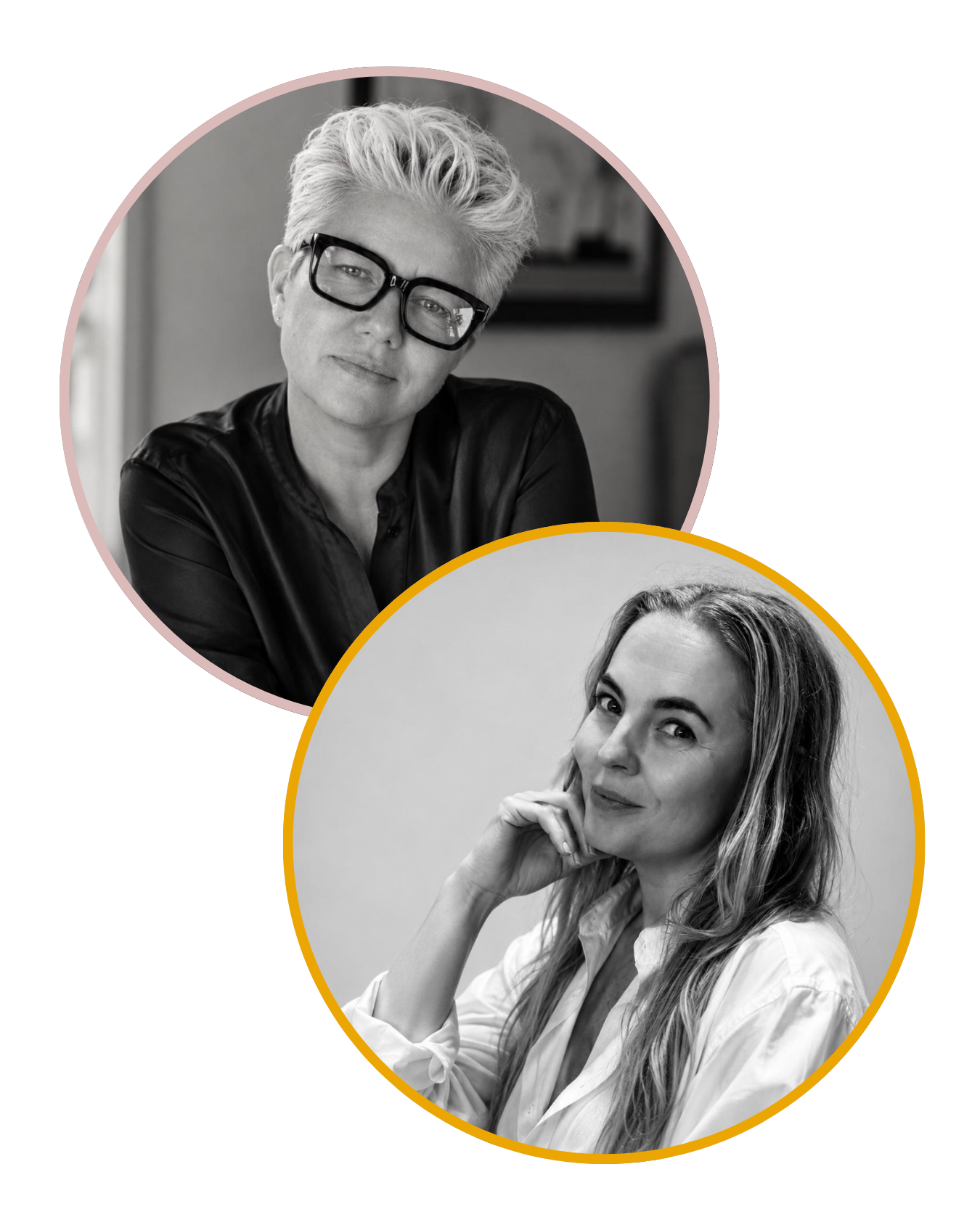
Going Grey, Getting Older and the Strange Business of Becoming Visible Differently
A Two Together article inspired by the Unstuck episode Grey Matters
Going grey sounds like it should be about hair.
It turns out it can be about an awful lot more than that.
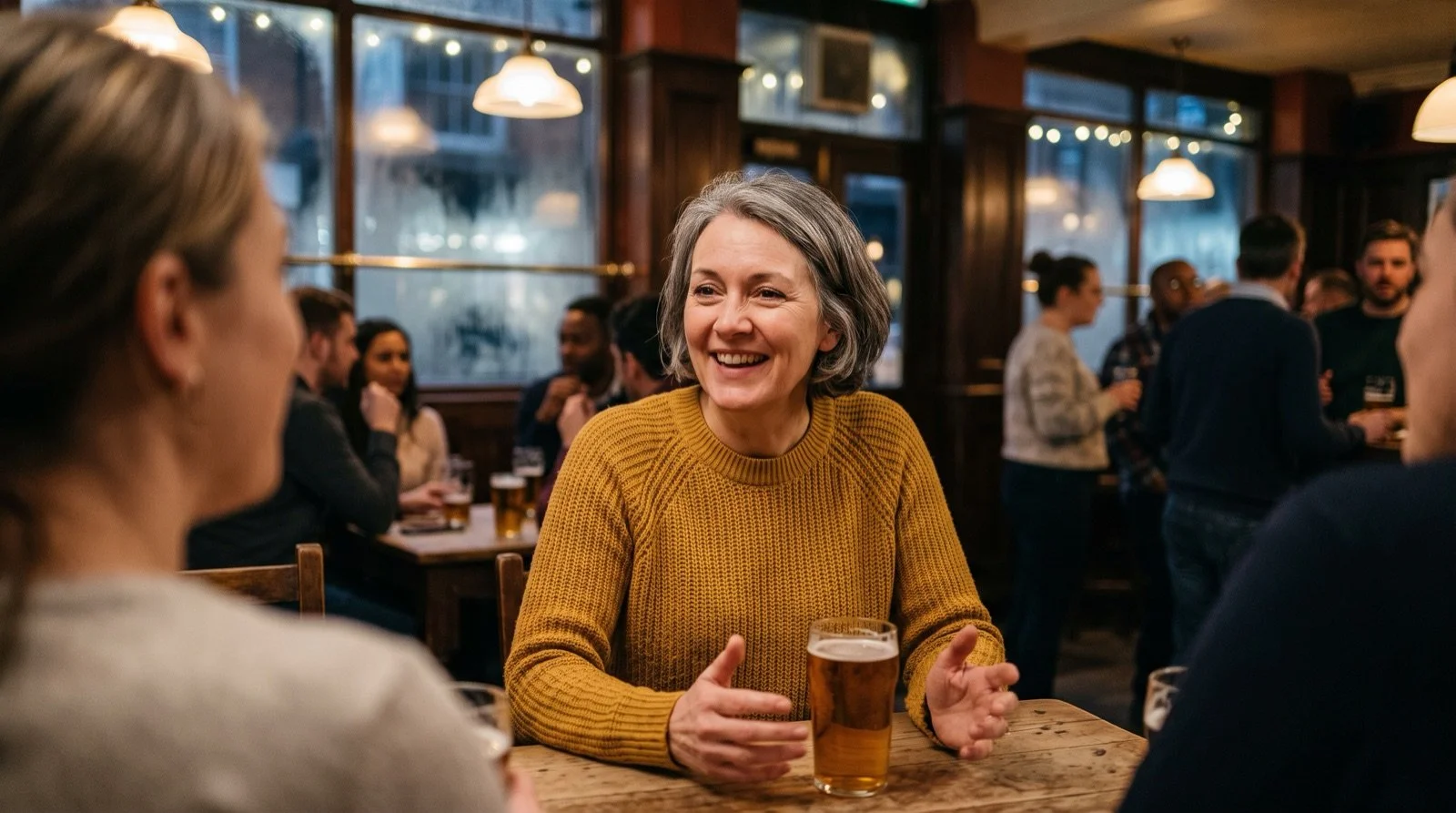
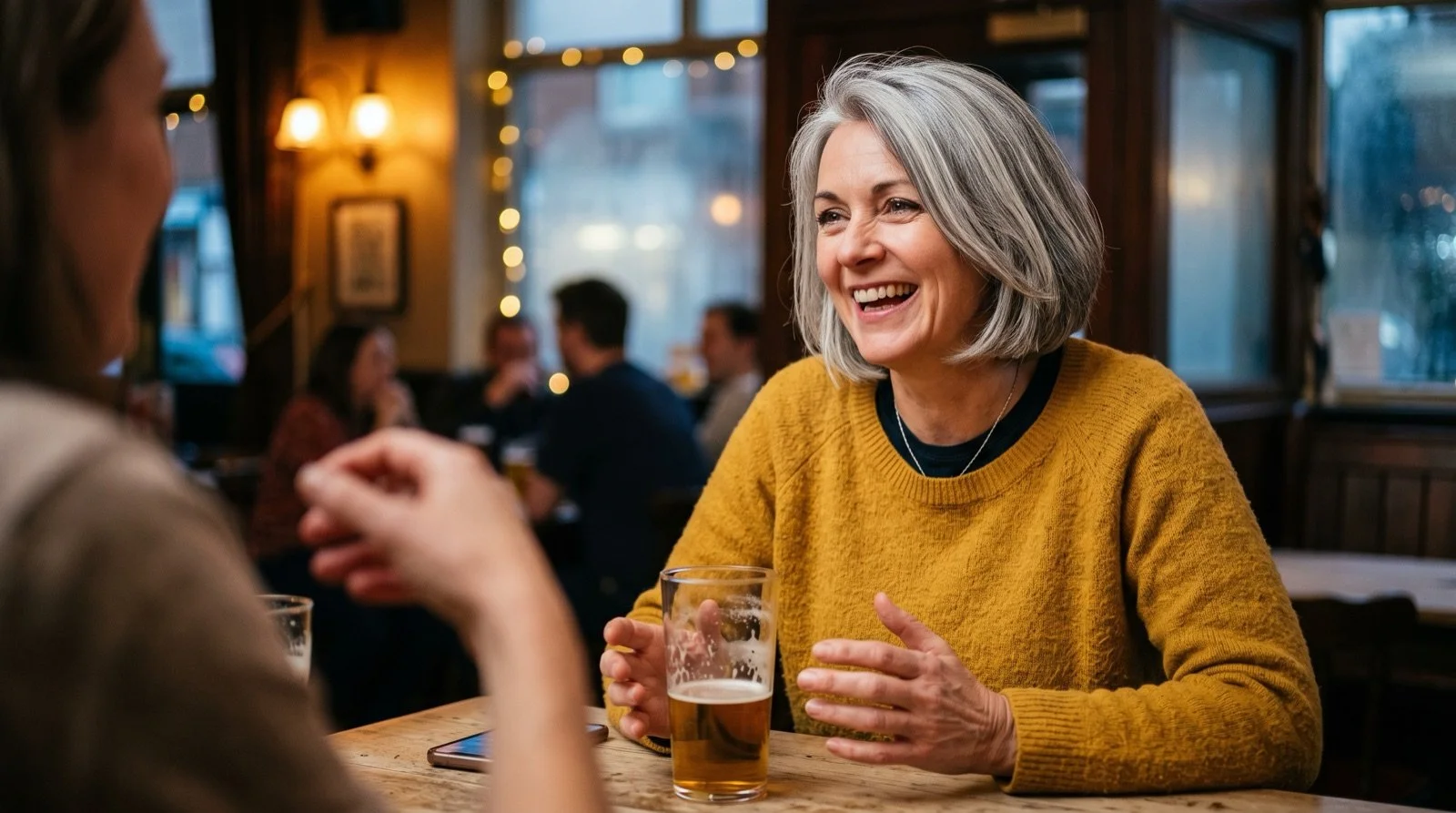
I had actually been going grey since I was about 18. But after years of colouring it, touching up the roots and pretending the whole thing wasn't happening, I finally decided to stop.
Partly because I couldn't be arsed anymore.
Every few weeks, there they were again. The roots. Another appointment. Another job. Another thing to fit around work, small children and the fairly relentless administration of adult life.
I was 48 and I thought: maybe this is simply what my hair looks like now.
What neither of us quite anticipated was how interested everybody else would be.
Friends and family mostly loved it. My family particularly liked it because they thought I looked more like my mum, which I loved.
Other people told me I was too young.
And then there were the complete strangers.
One night we were in a bar in Leeds when two younger men looked at us, pointed at me and then Lisa, and announced:
"Mother. Daughter."
We collapsed laughing.
They didn't.
They were genuinely baffled about what was so funny.
Then there was the man who offered me his seat on a train.
And the waiter who appeared to decide I was Lisa's male partner.
All of it was funny.
And also, underneath the laughter, surprisingly shocking.
Because it raised a much bigger question.
What happens when the way other people see us begins to change?
When ageing suddenly becomes visible
There is a strange point in life when ageing stops being an abstract concept and starts happening in the mirror.
For a surprisingly long time, we can wander around with an internal picture of ourselves that bears only a passing relationship to the number on our birth certificate.
I think I remained about 35 in my head for years.
Even into my forties I could look in the mirror and think I hadn't changed that much.
Then, somewhere along the way, the person looking back started to look different.
Wrinkles.
Changing skin.
A changing body.
Grey hair.
Hands that suddenly looked older than the hands I thought belonged to me.
And sometimes there was this peculiar feeling of:
Oh. That's me now.
When we talked about this, I realised there was sadness in it.
There was also helplessness.
Some changes are happening whether we approve of them or not.
We can exercise. We can colour our hair. We can buy whatever extraordinarily expensive serum somebody on Instagram has convinced us will transform our face while we sleep.
But we're still getting older.
And perhaps there is a kind of grief in that.
Not because ageing is inherently terrible.
Not because getting older means becoming less interesting, attractive, sexual, adventurous or relevant.
But because change usually means leaving something behind.
There can be a version of our body, our face or ourselves that we have known for years.
When that changes, we don't necessarily have to celebrate every bloody minute of it.
We can be grateful to be getting older and feel sad about parts of it.
Both things can be true.
Why does ageing seem to land differently for women?
Something else struck us during our conversation.
My husband has been grey for most of the time I've known him.
Nobody appears remotely troubled by this.
In fact, people regularly comment on how youthful he looks.
Grey-haired men can become distinguished.
Silver foxes.
Women have traditionally been offered rather different language.
She's let herself go.
She looks old.
She needs her roots doing.
She should make more effort.
She looks good for her age.
These messages don't have to be directed at us personally for us to absorb them.
Ageism can operate through the assumptions we make about other people and through the beliefs we absorb about our own ageing.
We take in messages about what women are meant to look like from films, advertising, social media, family, friends and the thousands of tiny comments we hear over a lifetime.
Eventually some of those messages can begin to sound suspiciously like our own thoughts.
And that's where things get psychologically interesting.
Because there is a big difference between:
I like colouring my hair.
and:
I have to colour my hair because otherwise people will think I look old.
Exactly the same behaviour.
Potentially very different reasons underneath it.
When the choice stops feeling like a choice
At Two Together, we're interested in what happens when something touches one of our more sensitive spots.
Ageing can stir up all sorts of things.
Fear.
Shame.
Loss.
Questions about attractiveness.
Questions about visibility.
Questions about who we are becoming.
And when uncomfortable feelings are stirred up, we tend to cope.
Schema Therapy describes broad patterns of surrender, avoidance and overcompensation. At Two Together, we've translated these into our everyday SOS language: Submit, Opt Out and Storm In.
Submit
We give in to the story.
Somebody makes a comment about how old we look and suddenly their judgement becomes our judgement.
We alter ourselves because complying feels easier than sitting with the discomfort.
Opt Out
We don't want to think about ageing at all.
We push it away.
We avoid the mirror.
We distract ourselves.
We decide this is absolutely a problem for Future Us.
Storm In
We fight.
We try to control the uncontrollable.
We fix, change, improve, research, book, buy or throw ourselves into action because doing something feels less frightening than feeling vulnerable.
None of those responses is automatically bad.
Sometimes changing how we look makes us feel fantastic.
Sometimes taking action is exactly what we need.
Sometimes there is nothing wrong with deciding that today is not the day we are going to contemplate our mortality and we'd rather watch Netflix.
The question isn't:
Am I coping badly?
It's:
Is this helping me now?
Whose choice is this?
Just to be absolutely clear, this is not a campaign to persuade women to stop colouring their hair.
Lisa is still colouring hers.
And I suspect that if somebody genuinely mistook her for my mother there might be an emergency call to the hairdresser before we'd even got home.
What we're interested in is choice.
One of the most useful questions Lisa asked during our conversation was:
Who is this decision for?
Am I doing this because I genuinely like it?
Does it make me feel more like myself?
Or am I frightened of what somebody else will think if I don't?
Am I choosing to change something?
Or am I reacting to shame, fear or an idea about what a woman of my age is supposed to look like?
There isn't a correct answer.
Colour your hair until you're 103.
Stop tomorrow.
Go blonde.
Go grey.
Go pink.
The interesting bit is whether the choice actually feels like yours.
Who is talking when you look in the mirror?
Then there's the voice in our own heads.
Most of us have some form of inner critic.
Ours are particularly enthusiastic.
You look in the mirror and the scanning begins.
Too old.
Too big.
Too wrinkled.
Too saggy.
Not attractive enough.
Not what you used to be.
And often we accept those thoughts as though they're simply objective observations.
One way of creating a little distance is to imagine someone you love saying exactly the same things about herself.
Your best friend.
Your sister.
Your daughter.
Imagine she looks at you and says:
"I'm getting older. I'm less beautiful. I'm becoming invisible."
Would you agree?
Would you look at her and see less?
Or would you see everything she's currently leaving out?
Her humour.
Her warmth.
Her intelligence.
Her experience.
The things she has survived.
The confidence she didn't have at 25.
The life contained in that changing face.
That doesn't mean we need to stand in front of a mirror chanting affirmations about how magnificent we are.
Unless that's your thing.
But it can be useful to notice the enormous gap between how we talk to ourselves and how we would talk to somebody we love.
Calling in the Lifeguard
This is where our Lifeguard comes in.
The Lifeguard is our Two Together way of making the Schema Therapy idea of the Healthy Adult easier to use in ordinary life.
The Lifeguard isn't the perfect version of us who has mastered ageing, drinks two litres of water a day and never cries in a changing room.
Thank God.
It's simply the part of us that can get curious before automatically reacting.
Instead of immediately colouring the roots, booking something, hiding, criticising ourselves or deciding our best years are apparently over, the Lifeguard might ask:
What am I actually feeling?
What story am I telling myself about this change?
What do I need?
Maybe we need reassurance.
Maybe we need to talk about the fact that our body is changing.
Maybe we need to admit that we're grieving something.
Maybe we need a fabulous haircut.
Maybe we need to colour our hair.
Maybe we need to stop colouring it.
The Lifeguard isn't interested in giving us another rule to follow.
It's interested in helping us make a choice.
Perhaps we're not becoming invisible. Perhaps we're becoming visible differently.
The most interesting part of this story isn't really that I stopped colouring my hair.
It's that I didn't start again when other people's reactions made me uncomfortable.
I've spent a lot of my life worrying about approval and wanting people to accept me.
Ten years ago, somebody reacting badly to my appearance might very quickly have become my problem to solve.
This time it didn't.
That doesn't mean I've conquered ageing.
I haven't.
I'm still noticing the wrinkles.
I'm still not entirely delighted about what's happening to my hands.
Both of us are still working out what getting older means for us.
There are bits we like.
There are bits we really don't.
There are things we are accepting and things we will probably continue fighting for the foreseeable future.
But perhaps becoming unstuck doesn't require us to reach some glorious state of complete self acceptance.
Maybe sometimes it's smaller than that.
We notice the judgement.
We notice the fear.
We notice the urge to react.
And somewhere in that tiny space, we ask:
Is this what I want, or is this what I've learned I'm supposed to want?
Getting older may not be optional.
But perhaps how we relate to ourselves while we're doing it still is.
A few things to think about
If this has touched a nerve, you might want to sit with a few questions rather than immediately trying to answer them perfectly.
What changes about ageing are hardest for me?
What do I imagine those changes mean about me?
Whose judgement am I most frightened of?
When I feel uncomfortable about getting older, do I tend to Submit, Opt Out or Storm In?
What would I say to somebody I loved who felt the way I do?
And underneath all of that:
What might I actually need?
More from the “Unstuck Conversation” series
Watch the “Unstuck” podcast
Alternatively
Watch or listen to this episode wherever you normally get your podcasts.