

Why Do I Keep Getting Stuck?
"I know what I should do... so why do keep doing the opposite?"
It's one of the questions we hear most often.
Why do I keep ending up in the same kinds of relationships?
Why do I lose my temper with the people I love most?
Why do I avoid difficult conversations?
Why do I put everyone else's needs before my own?
Why do I keep feeling anxious, overwhelmed or not good enough?
At Two Together, we don't believe you're broken. We believe your mind is trying to protect you. The problem is that sometimes the ways we learned to survive years ago are the very things keeping us stuck today.
Imagine we're all out at sea
Life is a bit like being out at sea.
Some days the water is calm. Other days it feels as though you're battling huge waves.
But it isn't just the waves we need to understand. Beneath the surface are invisible currents. Sometimes they gently guide us. Sometimes they pull us in directions we don't even realise, until we look up and wonder how on earth we ended up over here again.
That gap between where you meant to go and where you keep arriving? That's the bit this page is about.
We all have emotional needs
Every child has core emotional needs. We need to feel safe, loved, accepted, understood, encouraged and protected. We need healthy boundaries. And we need to be allowed to become ourselves.
When those needs are met consistently, we gradually learn to navigate life's waters with reasonable confidence.
When they aren't, our minds do something quite sensible. They develop beliefs that help us make sense of what's happening.
Perhaps:
I'm not enough.
I have to keep everyone happy.
People leave.
I can't trust anyone.
If I make a mistake, I'll be rejected.
In Schema Therapy, these deeper beliefs are called schemas. We like to think of them as the invisible currents beneath the surface. They quietly influence where we end up, often without us realising.
They're not stupid. They're not weakness. At the time, they were the most reasonable conclusion available with the information you had.
Then life happens
A disagreement. A piece of criticism. A rejection, or a disappointment. A wave.
If one of those waves connects with an old current, it can feel much bigger than the situation itself. Your reaction arrives before your reasoning does. Before you've had time to think, your brain has already decided how to survive.
This is why the "over-reaction" so many people quietly criticise themselves for usually isn't an over-reaction at all. It's a right-sized reaction to something much older that just got touched.
Ever had a perfectly ordinary comment ruin an entire evening? That.
Why understanding it isn't the same as changing it
Here's the frustrating part, and the reason so many thoughtful, self-aware people end up feeling like they're failing at self-improvement.
You can know exactly what your pattern is. You can name it, explain it, spot it in other people, possibly write a rather good paragraph about it. And still do the same thing on Thursday.
That's not a lack of willpower. Schemas don't live purely in the thinking part of us. They involve what we expect, what we feel, what we remember and the meaning we make of things. When one is activated, it's a full-body event, not a debate.
Insight is genuinely useful. It's just rarely enough on its own. What tends to shift things is noticing the pattern while it's happening, often enough and with enough kindness, so a different response becomes possible.
How the loop keeps itself going
Old patterns are remarkably good at collecting evidence for themselves. Here's how that usually looks.
Say somewhere underneath there's a current that says my needs aren't as important as everybody else's.
The wave. Someone asks you to take on something extra. You're already at capacity.
The pull. Saying no feels genuinely uncomfortable. Disproportionately so. So you say yes.
The cost. You do it, brilliantly, at 11 pm, while quietly resenting everyone involved.
The outcome. Nobody notices what it took, because you made it look easy. They ask again next month.
The confirmation. Some part of you concludes: see, my needs really don't count.
And the current gets a little stronger. Next time, the pull to say yes is harder to resist.
Nobody in that story did anything wrong. That's what makes these loops so sticky. Each individual step is understandable. It's only when you zoom out that you see the pattern quietly reinforcing itself.
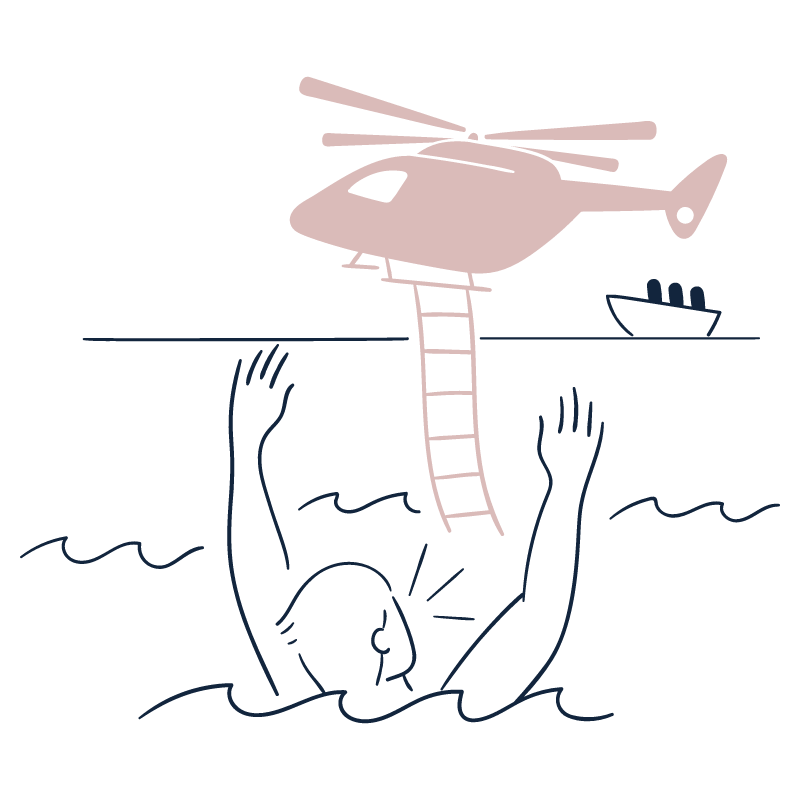
We send out an SOS
To help people recognise these automatic survival responses in everyday life, we've developed a simple framework based on Schema Therapy principles.
SOS stands for:
Submit — keep the peace, people-please, ignore your own needs.
Opt Out — withdraw, avoid, distract or shut down.
Storm In — fight back, become defensive, critical or controlling.
Most of us have a favourite. Many of us have a work one and a home one, which can be a slightly uncomfortable thing to notice.
These aren't character flaws. They're understandable survival strategies that once helped us cope, but can keep us repeating the same patterns.
So the question we come back to isn't "is this a bad coping strategy?" It's "is this helping me here?"
Sometimes the honest answer is yes. Opting out of an argument at 11 pm on a Sunday is often extremely sensible. The problem isn't the strategy. It's when it's the only one available.
Meet your Lifeguard

In Schema Therapy, we talk about strengthening the Healthy Adult. At Two Together, we think of this as your Lifeguard.
The Lifeguard notices distress, stays calm, understands why you're struggling, and helps the overwhelmed part of you safely back to shore.
Importantly, the Lifeguard is not a stricter version of your inner critic. It doesn't stand on the beach with a whistle listing everything you did wrong on the way out. It's the part of you that gets curious instead of contemptuous.
Most people have met their Lifeguard before, usually while helping somebody else. It's the voice you'd use for a friend in the same situation. Turning it inwards is the work.
R E S E T
Once we recognise we're caught in an old pattern, we need a way back. That's why we've developed the RESET process:
Recognise
what's happening.
Exhale
and calm your nervous system
Slow
things down
Explore
what you need and what choices you have
Take
one step towards the life you want
RESET isn't about finding the perfect response. Sometimes you'll still submit. Sometimes you'll Opt Out. Sometimes you'll Storm In spectacularly and only recognise it three hours later while unloading the dishwasher.
That's human. Noticing it three hours later is still noticing it, and it's a great deal better than not noticing at all.
Where to start, if you'd like something to actually do
Not a programme. Just three small things worth trying this week.
Notice, don't fix
For a few days, simply spot which SOS you reach for and when. No changing anything. Curiosity first. Change is much easier once you can see the shape of the thing.
Ask the size question
When a reaction feels bigger than the situation, try: What has this touched in me? Not "why am I like this", which is just the critic in a lab coat.
Take one step, not ten
One sentence said out loud. One thing not taken on. One evening where the marking doesn't get finished, and the world stubbornly keeps turning.
Becoming Unstuck
The goal isn't to stop life's storms. Storms happen to all of us, and anyone selling you a permanently flat sea should be treated with suspicion.
The goal is to notice when an old current is pulling you, understand why, and choose a different direction.
That is what becoming Unstuck looks like.
A gentle note
Learning about your patterns can bring things up. That's normal, and often a sign something's landed.
The material on this site is educational, not personal therapy. If you're finding things difficult, or something here has stirred up more than you expected, please talk to your GP or another qualified professional. That isn't a failure of self-improvement. It's the Lifeguard doing exactly its job.
What next?
Want the psychology properly explained?
Our page on the psychology behind Two Together sets out where these ideas come from, what belongs to Schema Therapy, and what's our own shorthand.

Casual Listening
Join us for friendly conversations about the stories we tell ourselves. Free, relatable, and easy to listen to on your commute, during a walk, or in a quiet moment.

Want to go deeper?
Want to explore your recurring themes with more structure? Our self-guided mini courses help you notice patterns, understand schemas, and make more conscious choices.

Want to do this with someone?
Ready for one-to-one support? Tanya and Lisa offer professional online therapy to help you explore patterns safely, personally, and at your own pace.
Want to read around it?
Our [Schema Therapy resources page] has books, podcasts and websites we rate.
Answers to Frequently Asked Questions
-
Because these patterns don't live purely in the thinking part of us. In Schema Therapy they're called schemas, and they involve what you expect, what you feel, what you remember and the meaning you make of events.
When one is activated, the reaction arrives before the reasoning does. Insight is genuinely useful, but it usually isn't enough on its own. What tends to shift things is noticing the pattern while it's happening, often enough and kindly enough that a different response becomes possible.
-
Often it isn't an overreaction at all. When a present-day event connects with a long-standing pattern, the feeling can be much bigger than the situation itself, because something older has just been touched. A useful question in that moment is not "why am I like this?" but "what has this touched in me?"
-
SOS stands for Submit, Opt Out and Storm In. Submit means keeping the peace, people-pleasing and ignoring your own needs. Opt Out means withdrawing, avoiding, distracting or shutting down. Storm In means fighting back, or becoming defensive, critical or controlling.
These are Two Together's translation of the Schema Therapy coping responses of surrender, avoidance and overcompensation.
-
No. People-pleasing is a coping response, not a personality defect. It usually developed because at some point it genuinely helped, often by keeping you safe or keeping a relationship stable.
The more useful question isn't "is this a bad coping strategy?" but "is this helping me here?" Sometimes the honest answer is yes. The difficulty comes when it's the only strategy available.
-
Start by noticing rather than fixing. For a few days, simply spot which coping response you reach for and when, without trying to change anything. Curiosity first, because change is much easier once you can see the shape of the thing. Then take one small step rather than ten: one sentence said out loud, or one commitment not taken on.
-
It's the part of you that can notice distress, stay calm, understand why you're struggling and help the overwhelmed part of you back to safety.
It isn't a stricter version of your inner critic. Most people have met it before while helping somebody else; it's the voice you'd naturally use for a friend in the same situation. Turning it inwards is the work.