Midlife Friendships: When Your Social World Shrinks, Changes and Gets More Intentional
A Two Together article inspired by the Unstuck episode Midlife Friendships: Cull or Recession
We have been friends for years.
Long enough to disagree properly. Long enough to know each other's history. Long enough to have had periods when we have absolutely not got on.
There was, for example, Gibraltar.
This particular bit of the story is mine, Tanya's. At one point, when our friendship was not in particularly good shape, I was feeling lonely where I lived and announced that I might move my entire family to Gibraltar.
Lisa responded with the calm emotional maturity you would expect from a psychologist. NOT.
There are several versions of this story depending on which one of us you ask.
But underneath the comedy was something that has become much more important to us as we have got older.
Friendships change.
Sometimes they deepen. Sometimes they drift. Sometimes we realise we have been tolerating things for years that we no longer want to tolerate. And sometimes our social world simply becomes smaller, not because anybody has done anything wrong, but because life has become very, very full.
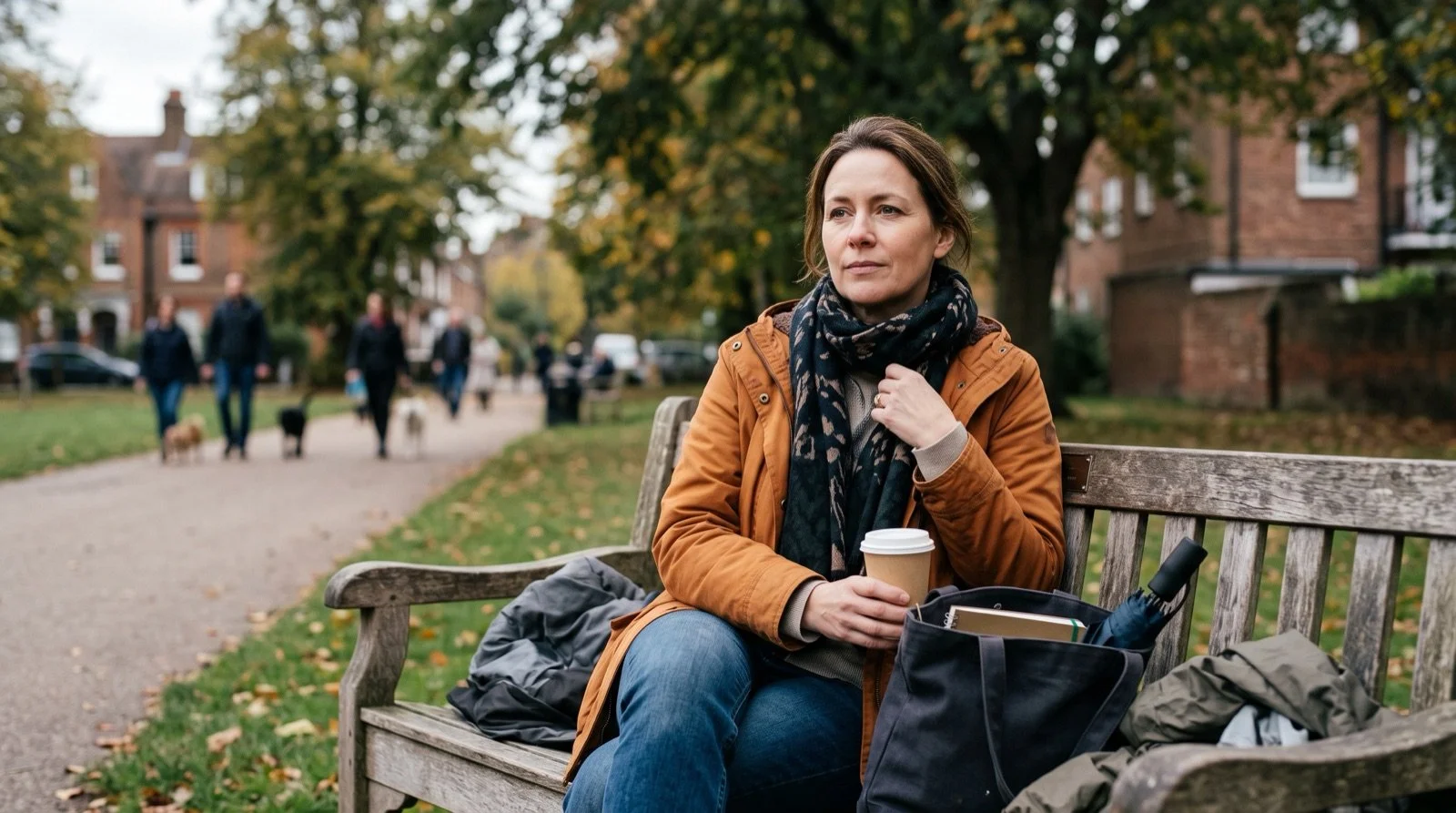
Around the same time, I was also experiencing something that was new for me: loneliness.
That has been strange to admit.
When I was younger, my social life was almost embarrassingly busy. There were always people around. Plans. Weekends. Work friends. Old friends. Friends of friends.
Now there are children, partners, work, ageing parents, geography, school calendars and the extraordinary number of administrative tasks apparently required to keep an adult household functioning.
The friendships that remain can feel more important than ever.
And yet there can be fewer of them.
So perhaps the question is not whether we need a dramatic friendship cull.
Perhaps it is this:
What do we actually need from friendship now, and are the relationships in our lives giving us enough of it?
When a full social life becomes a smaller one
There is a particular shock in noticing that your social world has shrunk.
It can happen quietly.
People move away. Jobs change. Children arrive. Caring responsibilities increase. Weekends become complicated. Somebody who once lived ten minutes away now lives three hours away. A friend you used to see every week becomes somebody you exchange voice notes with twice a month.
None of this necessarily means the friendship is weaker.
But it can mean that connection becomes less automatic.
Research on loneliness across midlife and later life suggests that contact with friends and our wider social circumstances matter. Loneliness is not simply a question of how many people we know. It is also about whether we experience the connection, support and belonging that we need.
That distinction matters because you can have an extremely busy WhatsApp and still feel lonely.
You can also have a relatively small circle and feel deeply connected.
For me, the difficult bit was realising that I had started to treat the shrinking of my social world as something I simply had to accept.
It is what it is.
Everyone is busy.
This is just what happens when you have children.
There was some truth in all of those things.
But underneath them was also a need that was not being met.
I was lonely.
And those two things are not the same.
Accepting that adult friendships change can be realistic.
Automatically giving up on our own need for connection is something else.
The friendships we needed at 25 may not be the friendships we need at 50
Lisa's story is different, and this is where her voice comes in. In her twenties, she had an enormous social world.
There always seemed to be somebody available.
Looking back, she can see that this was not just because she was extraordinarily popular.
Although she would probably like that version.
As an only child who spent quite a lot of time alone growing up, having people available gave her something important.
Safety.
If she was worried, lonely or unsettled, there was always somebody she could ring or somewhere she could go.
So having lots of friendships was not simply social.
It was a way of making sure she was never left completely on her own unless she chose to be.
This is where our early experiences can quietly follow us into adult relationships.
Schema Therapy starts from the idea that all of us have core emotional needs. These include connection and belonging, safety, autonomy, freedom to express ourselves, spontaneity and realistic limits.
We then develop ways of understanding ourselves and other people, and ways of coping when those needs feel threatened.
Sometimes the behaviour makes perfect sense once we understand the need underneath it.
For Lisa, keeping lots of people around could help protect against the fear of being alone.
But the same need could also lead her to tolerate friendships that were not always particularly good for her.
Why do we stay in friendships that no longer feel good?
This is something both of us recognise.
There have been friendships we probably stayed in for much longer than was helpful.
Not because the other person was necessarily terrible.
Friendships can simply become one sided, shaming, demanding or increasingly incompatible with who we have become.
And leaving a friendship is strangely difficult.
We have an enormous cultural script for romantic break ups.
We know relationships can end. We have language for heartbreak. We ask whether couples are compatible. We accept that people can grow apart.
Friendship is much murkier.
There is often no obvious ending.
Nobody moves their belongings out.
There may not be a final conversation.
Sometimes there is simply a growing sense that being with somebody leaves us feeling worse rather than better.
Research on women's friendships in adulthood has found that closeness can shift around major turning points and changes in social support. In real life that makes sense. Our circumstances alter, and so does what we need from the people around us.
But recognising that a friendship has changed is only part of the problem.
We then have to decide what to do about it.
SOS can show up in friendship too
When a friendship is difficult, or when we are feeling lonely, we can fall into the same broad coping responses we talk about elsewhere in Two Together.
Submit
We give in to the familiar pattern.
We keep saying yes when we want to say no.
We travel further, accommodate more, make the excuses, overlook the comment, accept being the person who always organises everything, or tell ourselves that asking for more would be selfish.
Sometimes we stay because setting a boundary feels mean.
Sometimes we stay because being in a disappointing friendship feels safer than the possibility of having no friendship at all.
Opt Out
We withdraw.
We tell ourselves we cannot be bothered.
We stop replying.
We decide people are too much effort.
We avoid the awkward conversation or the vulnerability involved in trying to make a new connection.
If we are lonely, Opting Out can be particularly sneaky because it protects us from rejection while also helping to keep us lonely.
Storm In
We take charge.
We organise everything. We chase. We fix. We become the friendship project manager.
Or we become angry, controlling or very quick to cut somebody off because feeling disappointed or unimportant is too painful.
Again, none of these responses makes us bad friends.
They are ways of coping.
The useful question is whether the response is helping us get the connection we actually need.
Maybe it is not a cull. Maybe it is discernment.
The phrase friendship cull sounds satisfyingly decisive.
It also sounds a little brutal.
In reality, what has happened for both of us is more subtle.
As we have got older, we have become less willing to tolerate relationships in which we repeatedly feel small, ashamed, taken for granted or unable to be ourselves.
Part of that is probably confidence.
Part of it is experience.
And part of it is brutally practical.
We have less time.
Time really does change the calculation.
There is only so much of it available after children, partners, work, family responsibilities and the things we need to do simply to remain vaguely functional.
That does not mean friendships become less important.
If anything, it can make the quality of them matter more.
Lisa put this beautifully in the episode.
When she was younger, safety in friendship partly meant having lots of people available.
Now, for her, safety feels more like being able to be herself.
Feeling valued.
Not having to monitor everything she says.
Knowing she can relax.
That is a very different definition of a successful social life.
It is less about how many people could theoretically come to your birthday and more about who you can sit with when life is awful.
But what if you are lonely?
This is the part we do not want to tidy up.
Becoming more discerning does not magically protect us from loneliness.
You can make the right decision to let a friendship go and still miss the person.
You can know a relationship was not good for you and grieve it.
You can have wonderful friends who live far away and still feel desperately alone on a Wednesday afternoon.
You can also be surrounded by family and feel that a particular kind of adult friendship is missing.
Loneliness is not evidence that you have failed socially.
It is a feeling that may be telling you something about connection, belonging or companionship that you need more of.
That does not mean the answer is to fill every spare evening with people.
It might mean reconnecting with somebody you miss.
It might mean being more honest with an existing friend.
It might mean joining something, suggesting the coffee, sending the message or accepting that awkward first stage of getting to know somebody new.
And sometimes it may simply mean allowing yourself to admit:
I need more connection than I have at the moment.
That can feel vulnerable.
But it is much more useful than telling ourselves we should be perfectly happy without it.
Calling in the Lifeguard
Our Lifeguard is the part of us that can notice the need without immediately repeating an old way of coping.
It does not arrive with a spreadsheet ranking all our friends.
It does not tell us that we have failed because a friendship ended.
And it certainly does not insist that every friendship needs to be deep, reciprocal and transformational.
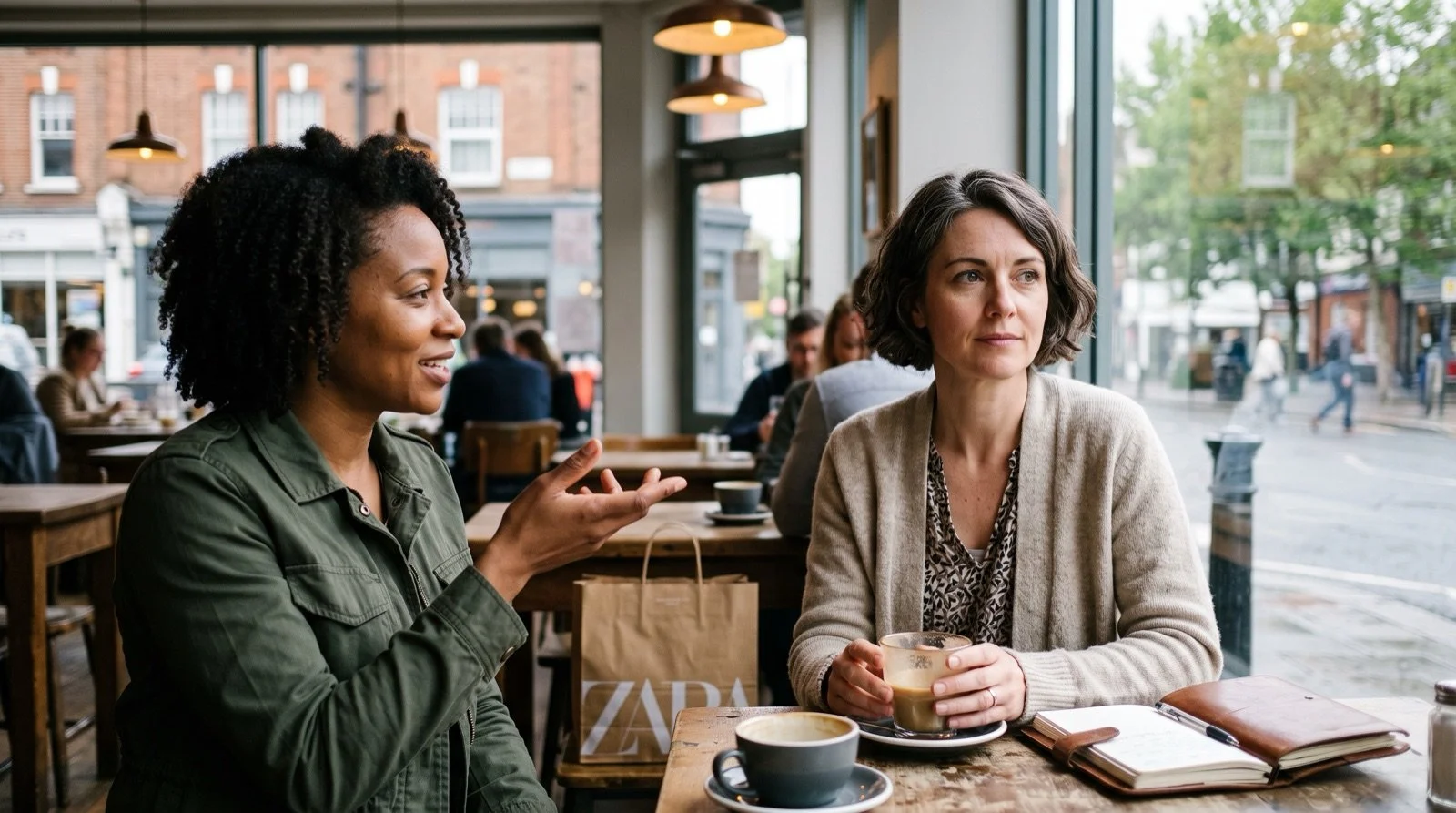
Some people are wonderful coffee friends.
Some are the people you ring at two in the morning.
Some belong to a particular chapter of your life.
The Lifeguard is interested in whether we are choosing rather than simply repeating.
It might ask:
What do I actually need from friendship at this stage of my life?
How do I tend to behave when I am frightened of losing somebody?
Am I staying because this relationship matters to me, or because I am frightened of what will happen if I let it change?
If I am lonely, what is keeping me stuck there?
What is one small thing I could do that moves me towards connection?
Sometimes the answer will be a boundary.
Sometimes it will be a difficult conversation.
Sometimes it will be making more effort rather than less.
Sometimes it will be letting something quietly run its course.
And sometimes it will be sending a message saying, quite simply, 'Do you fancy a cup of tea?'
Friendship does not have to stay the same to have mattered
One of the saddest ideas we can carry is that if a friendship ends, changes or becomes less close, it must have been a failure.
We do not think that is true.
There are people who have been enormously important to both of us who are no longer part of our everyday lives.
That can still hurt.
But it does not erase what the friendship was.
Some relationships really do belong to particular versions of ourselves.
Other friendships somehow stretch across decades, rows, marriages, children, career changes, bereavements, terrible decisions and, apparently, threats to move to Gibraltar.
Perhaps getting older is partly about becoming more intentional.
Not ruthless.
Not endlessly evaluating everybody in our lives.
Just a little clearer about what connection feels like now.
And perhaps a little braver about admitting when we need more of it.
A few things to think about
If this article made you think about your own friendships, you might want to notice:
Which friendships leave me feeling most like myself?
Where do I feel safe, accepted and able to relax?
Are there relationships where I repeatedly silence myself, over give or tolerate things that hurt?
When friendship feels uncertain, do I tend to Submit, Opt Out or Storm In?
Has my social world become smaller because that genuinely suits me, or have I slowly become more isolated than I want to be?
What kind of connection am I actually missing?
And perhaps most importantly:
What do I need from friendship now?
More from the “Unstuck Conversation” series





Watch the “Unstuck” podcast
Alternatively
Watch or listen to this episode wherever you normally get your podcasts.