A personal account of MGD, photophobia, uncertainty and the invisible effort of trying to keep living normally.
What follows is reconstructed from the notes and messages I wrote while this was unfolding. It is a personal account, not a clinical guide, and I have deliberately left out details that belong only to me and the people close to me.
A note before I begin
Before this happened, the words “dry eye” sounded mildly inconvenient. I imagined a bit of grittiness, perhaps some drops from the chemist, then life carrying on as normal.
I did not imagine a condition that could affect whether I could work, look at another person, sit through a family meal, travel independently or stay in a brightly lit room. I did not imagine becoming frightened of screens, wind, air conditioning and the ordinary act of keeping my eyes open.
Eventually, the clearest medical name for what was happening became meibomian gland dysfunction, usually shortened to MGD. The tiny glands inside the eyelids produce oils that help to keep the tear film stable and slow down evaporation. When those glands become blocked, inflamed or less effective, the eyes can feel dry even when they are watering. Blepharitis, dry eye and MGD are often discussed together. In my case, MGD became the most useful medical description. But it remained just that: a technical definition. It could name what was happening in my eyelids, but it went nowhere near explaining what the experience was truly like for me, just as no definition or diagnosis can ever contain the whole lived reality of an illness.
Late winter: it starts with light
Towards the end of 2025, my eyes were not quite right, although looking back I think the beginnings were there much earlier.
I remember going out with a friend and wanting to shield my eyes from the light. I was wearing sunglasses more often when I was out because it felt more comfortable, but I did not question it. I simply thought: perhaps this is me now. I picked up eye drops from a chemist because they seemed sensible to have, without really thinking I had a problem.
It crept up on me slowly. By the end of 2025, I was blinking more frequently, my eyes were becoming dry and achy, and I was beginning to realise there was only so much screen time I could manage before I needed to stop and rest. Stressful or difficult conversations appeared to make it worse. Even then, it was manageable.
Then light began to feel different.
Fluorescent lighting in meetings felt harsh. Screens that had never troubled me became difficult. Looking at faces under bright lights could make me squint. Shade helped. The car could feel easier than the office. A baseball cap and sunglasses became less like accessories and more like equipment.
The symptoms moved around. Sometimes it was burning or grittiness. Sometimes it was an ache around my eyes and nose. Increasingly, the most disturbing symptom was not pain at all. It was an overpowering urge to close my eyes, as though the simple act of keeping them open required more effort than my body could sustain.
Fatigue made it worse. Poor sleep made it worse. Alcohol and dehydration could make it worse. I was perimenopausal, so fatigue, disrupted sleep and changes in how I felt were already part of the background. It made it harder to know which thread belonged to what.
Concentrating and focusing became genuinely difficult. A screen, a meeting, a conversation, even sustained listening could push me over a threshold I did not yet understand.
The fear did not come from one particular diagnosis. It came from not understanding what my own body was doing. My body no longer made sense to me. Something I had always taken for granted was suddenly behaving according to rules I could not understand. The symptoms shifted, the triggers seemed inconsistent and ordinary things required calculation. When your own body becomes unfamiliar and unpredictable, you feel profoundly vulnerable. The uncertainty itself was frightening: not knowing why this was happening, what would make it worse or whether tomorrow would be manageable.
The vulnerability to harm lens
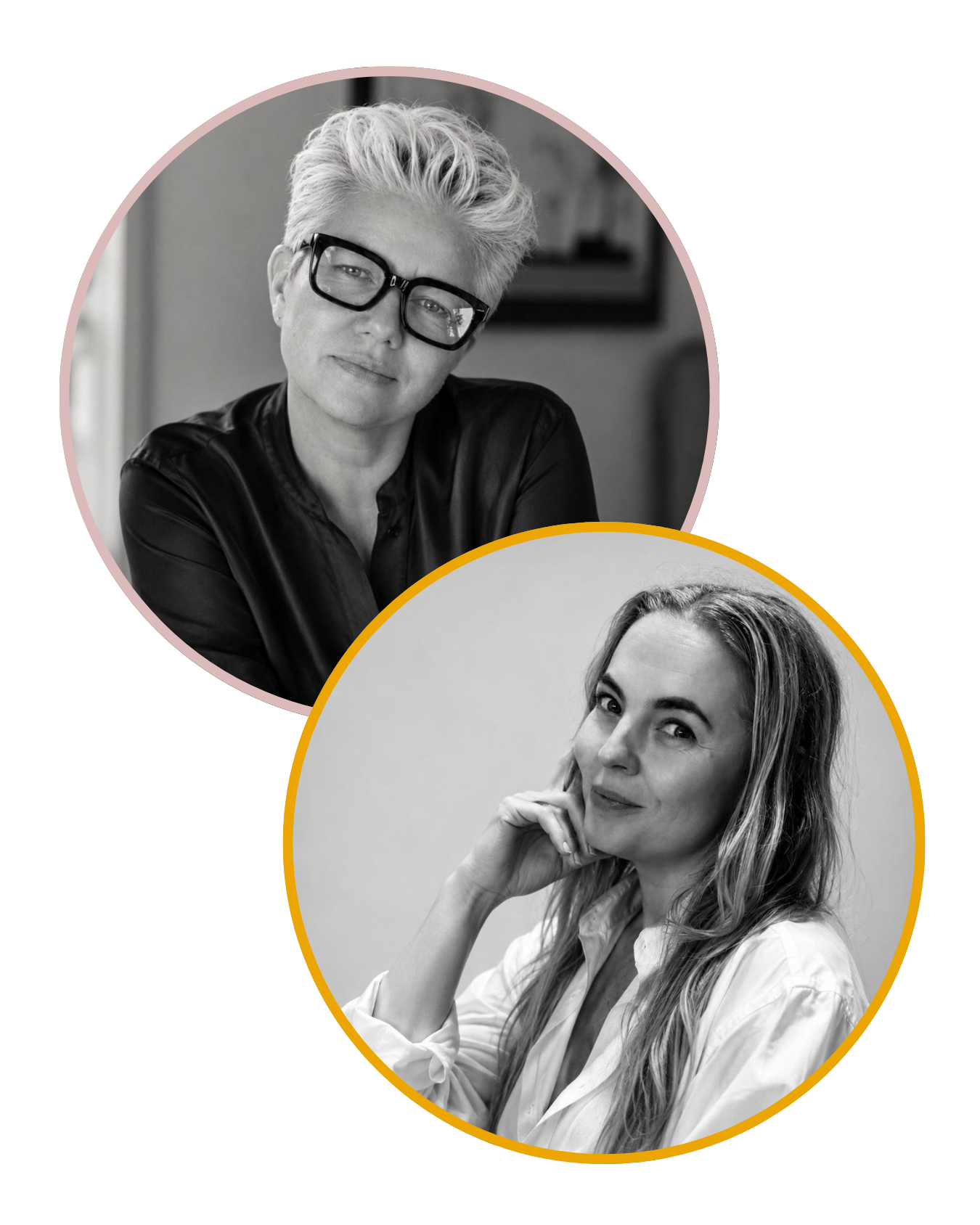
On our podcast, Unstuck, Tanya and I talk about schemas as lenses: patterns that influence what we notice, what we fear and what we expect. The lens that became most active for me during this period was vulnerability to harm. It did not create the symptoms, and it did not mean the symptoms were imaginary. It meant that once my body became unfamiliar and unpredictable, my attention kept searching for danger. Every new sensation could feel like a warning, and every bad day like evidence of what might happen next.
We also use our SOS language to describe different ways of trying to cope when a schema is activated: Submit, Opt Out and Storm In. I moved most obviously into Storm In. I researched, gathered information, sought appointments and tried to become an expert in my own condition. Action gave me a temporary sense of control, but it could also send me further into the maze.
At other times, I Opted Out. I withdrew, switched off or disappeared into my own head. I might be physically present with friends or family, but part of me was elsewhere, monitoring my eyes, rehearsing worries or simply waiting until I could go home. Opting Out did not mean I did not care about the people around me. It was another attempt to feel safe when my body and mind were overwhelmed.
Neither response was a personal failure. Both were efforts to cope with a situation that felt threatening and uncontrollable. But each came with a cost. Storming In could make the fear louder. Opting Out could make my world smaller and leave me more isolated.
Early spring: trying to solve the mystery
Once something frightening begins in the body, the mind wants a cause. Preferably one cause, with a clear treatment and a reliable ending.
I became a detective in my own life.
I researched and researched. I went to my GP, opticians and anyone I thought might help. I wanted to become an expert in my own situation, to know exactly what was happening inside my body so that I could make sense of it and feel safe again.
Research, however, came at a cost. Alongside useful information, I found horror stories, contradictions and things I wished I had never seen. I kept looking because I wanted to feel safer, yet I often finished more confused and less safe than when I began.
Was it age? Was it perimenopause? My hormone treatment had changed not long before the steepest deterioration, so was oestrogen helping, worsening it or entirely unrelated? My hormone levels later came back within the expected range, but that did not settle the question. Online, one person would say HRT had transformed her eyes and the next would say it had made hers much worse.
Was it eczema around my eyes? Years of rubbing them? Stress? Screens? Incomplete blinking? Poor sleep? Air conditioning? Had several small vulnerabilities converged at once?
Then there was the question that brought the most self blame. I had semi permanent eyeliner along my upper lash line. I found research linking eyelid tattooing with tear film instability and meibomian gland loss. That is not the same as proving what caused one individual person’s condition, but emotionally I did not hear nuance. I heard: perhaps you did this to yourself.
I replayed old decisions as though I could reverse them by regretting them hard enough.
The search for a cause was understandable, but it was also exhausting. Every new theory briefly offered control, then opened another corridor of uncertainty. My mind became, as it can do, a labyrinth of endless passages and decision trees. I kept taking one turn after another, believing the next might lead to certainty, but becoming more lost and feeling less safe all the time.
Late spring: falling off a cliff
For a while the symptoms fluctuated but remained just about containable. Then, after an afternoon of sustained work, everything changed. I thought that if I rested, I would be all right again in a couple of days. Instead, by the weekend I was even worse. It felt as though I had fallen off a cliff.
Low contrast settings did not solve it. Turning a screen to black and white did not solve it. In an unlit room at work, I could still barely keep my eyes open. I would close them repeatedly, not because I was tired of listening, but because looking, thinking and concentrating had somehow become physically overwhelming.
Then I realised I could not go to work. For me, that was almost unthinkable. My dad never took a day off sick in his life, and he instilled the same work ethic in me. I never took time off school and, as an adult, I have rarely been off sick. Work is not something I cancel lightly. I have always expected myself to carry on.
But I could not drive to work. I had to cancel people who were relying on me. I could not read, and screens were beyond me. I could not even distract myself from what was happening. All I could do was sit with my thoughts, searching for answers, worrying and spiralling. The more desperately I looked for certainty, the further away it seemed. I felt acutely alone with it.
Even when I could get out, driving often required sunglasses. At a family theatre performance, I spent long stretches with my eyes closed even behind tinted lenses. During a day in a busy city, wind and sunlight made me feel as though I was battling my environment from morning until night. Home, and particularly a dim room, began to feel like the only truly safe place.
One day might be dreadful, followed by a better day that made no sense. I could struggle desperately in a dim room, then cope surprisingly well somewhere hotter and brighter. The inconsistency should have reassured me, but at first it did the opposite. If I could not predict it, how could I plan my life?
“I feel like I am just barely functioning on the thinnest thread.”
The photophobia felt unbearable. My body was frightening me, my thoughts had nowhere to go and I was worried that I would never get better.
The strangest part was what I could no longer do
I am a psychologist. My work depends on attention, eye contact, listening, thinking and being emotionally present. At first I assumed that screens were the main problem. Then a friend visited and, while I was simply sitting and listening, I felt an instant, almost irresistible need to close my eyes.
That frightened me more than anything else I had read.
In a therapy room, looking at people is not incidental. In a group, I am moving my attention between faces, tracking what is being said, thinking about what is not being said and holding the emotional atmosphere in mind. Add notes on a screen and bright institutional lighting, and a normal working day had become an endurance event.
I had always been deeply committed to my work. Cancelling, reducing what I could do or wondering whether I could practise normally did not feel like a diary problem. It reached directly into my identity. I worried about letting people down. I worried that others would see a minor eye complaint where I was experiencing a profound loss of function.
The same thing happened socially. Sometimes I cancelled plans or simply did not attend. At other times I could be physically present at dinner but internally counting how long I could keep going. I could sit with friends while part of my attention monitored the lighting, the airflow, the nearest place to rest and whether it would seem rude to close my eyes. I was there, but not fully there.
Sometimes I simply wanted to go home. Sometimes I wondered whether I would have to become boring to stay comfortable. Was this my life now: fewer plans, less spontaneity, less work, less of me?
Early summer: the referral carousel
I moved between an optometrist, my GP, eye clinics and private specialists. I was always looking for someone who could confidently tell me what the problem was, take it seriously, listen to me and see me as a whole person.
Instead, the picture kept breaking apart. One possibility pointed towards hormones and a gynaecologist, another towards skin problems and a dermatologist, another towards immune or neurological explanations. Each line of enquiry might have been reasonable on its own, but I could not find anyone who seemed able to weave the different threads into one coherent account of what was happening to me.
Some investigations produced findings that shocked and upset me, but even those findings did not explain the full severity of what I was experiencing.
Some clinicians listened with compassion. Others seemed unsure, told me the picture had gone beyond their expertise or offered an opinion that clashed with the one before. I was not expecting one person to know everything. I needed someone to help me hold the uncertainty and assemble the different parts.
At times I felt dismissed. It was difficult to communicate how upsetting and frightening this had become. On some days I needed a taxi simply to reach an appointment, yet I could still find myself sitting in the consulting room apparently composed and struggling to convey how little I was functioning.
The treatment list grew: lubricating drops, heat, steroid drops, immune modifying drops, antibiotics and four sessions of intense pulsed light treatment, usually called IPL. I had high hopes for IPL, but it did not resolve the problem. Some treatments helped a little. Some took weeks or months to judge. Advice about the same treatment could differ from one clinician to the next.
There were other complications and unexpected turns that I am choosing not to describe here. Each one unsettled me and made an already confusing path feel even less predictable.
I did not expect medicine to produce instant certainty. What I found hard was carrying the uncertainty largely by myself between appointments.
When “mild” does not feel mild
The word “mild” stayed with me. Dry eye can sound like a nothing condition, a minor inconvenience that should be easily managed. Yet that description bears little relationship to what it can actually do to a person’s life.
A report can use the word “mild” while the person holding it cannot tolerate a working day, join in family life or remain in an ordinary room with the lights on. A condition can sound minor and still be life altering.
There was also a gap between what I was feeling inside and how I presented to medical professionals. I think I often did a very good job of appearing articulate, organised and essentially fine, even when internally I was frightened and barely holding things together. Because I could describe what was happening calmly, the severity of its impact may have been difficult to see.
Being able to present well is not the same as coping well.
I do not think every clinician who reassured me was dismissing me. Some listened carefully and with real compassion. At other times, reassurance landed as minimisation because the impact on my life remained unseen. The system seemed better at describing isolated findings than answering the question: “Why can this person no longer function?”
That is the gap in which I felt lost.
The international dry eye literature recognises that symptoms and signs do not always line up neatly, that nerve sensitivity can be part of the picture and that moderate to severe dry eye can affect daily activity, work and mental health. I wish I had known that earlier. It would not have cured my eyes, but it might have stopped me questioning whether I was somehow overreacting to them.
Did I do this to myself?
Self blame became another symptom.
I returned repeatedly to the semi permanent eyeliner. I returned to every time I had rubbed irritated eyes, worked too long at a screen or pushed through tiredness.
Perhaps some of these things contributed. Perhaps several did. MGD is usually described as multifactorial, which is an unsatisfying word when what you want is one culprit. It means there may be vulnerabilities, triggers and amplifiers rather than a single event that explains everything.
Stress almost certainly amplified my symptoms, but that did not make the condition imaginary. Concentration and threat change the way we blink, hold tension and process sensation. Equally, a genuinely unstable tear film can make the nervous system more vigilant. The relationship can run in both directions without either side cancelling the other.
Knowing that MGD is multifactorial did not silence my inner critic. It kept telling me that this was my fault, that I had brought it on myself and should have known better.
On one side, I felt small, frightened and deeply vulnerable. On the other, I was berating and criticising myself for being in that position. It is an awful place to be, especially when you are isolated between appointments and receiving very different levels of compassion from different professionals.
I kept returning to the question, “Whose fault is this?” Self blame promised the feeling of control, but it left me smaller and less safe.
The internet made everything louder
When I did not feel fully understood in appointments, I went online.
At first, forums were validating. Other people understood why “just dry eye” could dominate a day. They spoke about the constant drops, the fear of light, the effect on work and the loneliness of having an invisible condition.
Then I found the horror stories.
I read accounts from people who had lost jobs, withdrawn from relationships and become desperate. Some wrote that the condition had affected them so severely that they no longer wanted to be alive. Those experiences should not be minimised. They also should not become a frightened newly diagnosed person’s forecast.
I went online looking for certainty and found the most extreme possibilities. The forums gave language to the seriousness of the condition, but they also trained my attention towards catastrophe. On my worst nights, I was no longer reading someone else’s story. I was rehearsing it as my future.
I now think people with severe dry eye need two forms of care at once. They need their physical symptoms taken seriously, and they need someone to notice what prolonged pain and uncertainty are doing to their mental health. Offering psychological support must never mean implying that the symptoms are “all in the mind”. It means recognising that minds are affected by bodies, especially when daily life begins to shrink.
The isolation no one could see
Dry eye is peculiarly invisible. Other people could see that I was still walking, talking and technically able to see. They could not see the calculations running in the background.
How bright will it be? Will there be air conditioning? Can I sit away from the fan? How much screen work will be involved? Will I need to explain the sunglasses? If my eyes deteriorate, can I leave? How much will I pay for this tomorrow?
The calculations made ordinary pleasures feel risky. Socialising stopped being restorative because I was monitoring myself throughout it. Family activities could become something to survive rather than enjoy. I missed being absorbed in the moment. I missed the version of myself who did not think about her eyes.
Illness can isolate us even in a full room. That was perhaps the hardest part: being with people I loved and feeling that a sheet of glass had come down between their experience and mine.
What has helped, and what has not
There has been no single miracle treatment. Improvement has come, when it has come, through several small things working together.
Heat and finding eye drops that suit me have helped. So has learning my patterns. Continuous visual concentration is often harder than a short exposure to brightness. Wind and moving air, including fans and air conditioning, can be potent triggers. Stress and exhaustion reduce my margin. Resting earlier is more effective than waiting until I have crossed the threshold.
Practical adaptations have helped me stay in life: carefully chosen sunglasses, shorter stretches of screen time, lower contrast settings when useful, planned breaks and permission to close my eyes without treating it as failure.
Most of all, better days have shown me that my body can settle. On one day I could barely function in a dim room. On another, I coped in a hot, brightly lit office with a fan and hardly needed drops. Recovery has not been a straight line. It has been progress, a setback, adjustment, then another attempt.
Being believed has mattered too. I did not need anyone to promise a cure. I needed someone to understand that the impact was real, even when it was difficult to see, and to help me hold the whole picture rather than another isolated piece of it.
There is no neat ending
I would love to finish this with a triumphant recovery paragraph. I cannot, at least not yet.
My symptoms still fluctuate. Treatment is ongoing. I still have days when the fear rises quickly and I wonder how much of my previous life I will get back.
But I no longer think that every bad day is a permanent verdict.
I am learning to hold two truths at once. This condition has been frightening, disabling and at times profoundly lonely. It is also changeable. My worst day has not become every day. Some findings may be reassuring, but they are not the whole story. A setback does not erase improvement. Uncertainty is uncomfortable, but it is not the same as hopelessness.
As a psychologist, I have spent years helping other people live with uncertainty. Living inside it myself has taught me how physical it feels, and how little comfort there is in being told simply not to worry. What helps is credible hope: a plan, careful assessment, honest information, attention to mental health and permission to take the impact seriously.
For now, I am trying to make my world bigger again, one ordinary thing at a time.
If this is happening to you
If you have found this because your own eyes have suddenly begun to dominate your life, I hope the first thing you take from it is that you are not weak and you are not ridiculous. “Dry eye” can sound small. The lived experience may be anything but.
Please do not treat my list of investigations or treatments as a plan for your own eyes. Dry eye is multifactorial and treatment needs to be individualised. New, severe or changing symptoms, particularly marked pain, redness, light sensitivity or changes in vision, deserve proper clinical assessment.
And if the emotional impact is becoming frightening, say that out loud too. It is part of the health picture, not an embarrassing footnote to it.
Further reading
NHS, Dry eyes: an accessible overview of symptoms, self care and when to seek professional help.
Tear Film and Ocular Surface Society, DEWS II Patient Summary: a detailed patient overview of dry eye, MGD, quality of life and individualised management.
Moorfields Eye Hospital, The Dreaded Dry Eye: an overview of factors that can affect tear film stability, including screens, stress, menopause, eczema and the environment.
Lee and colleagues, Eyelid Tattooing Induces Meibomian Gland Loss and Tear Film Instability: a small observational study relevant to the discussion of semi permanent eyeliner, but not proof of causation in any one person.
This article describes one person’s experience and is not medical advice. Always seek appropriate professional assessment for eye symptoms.